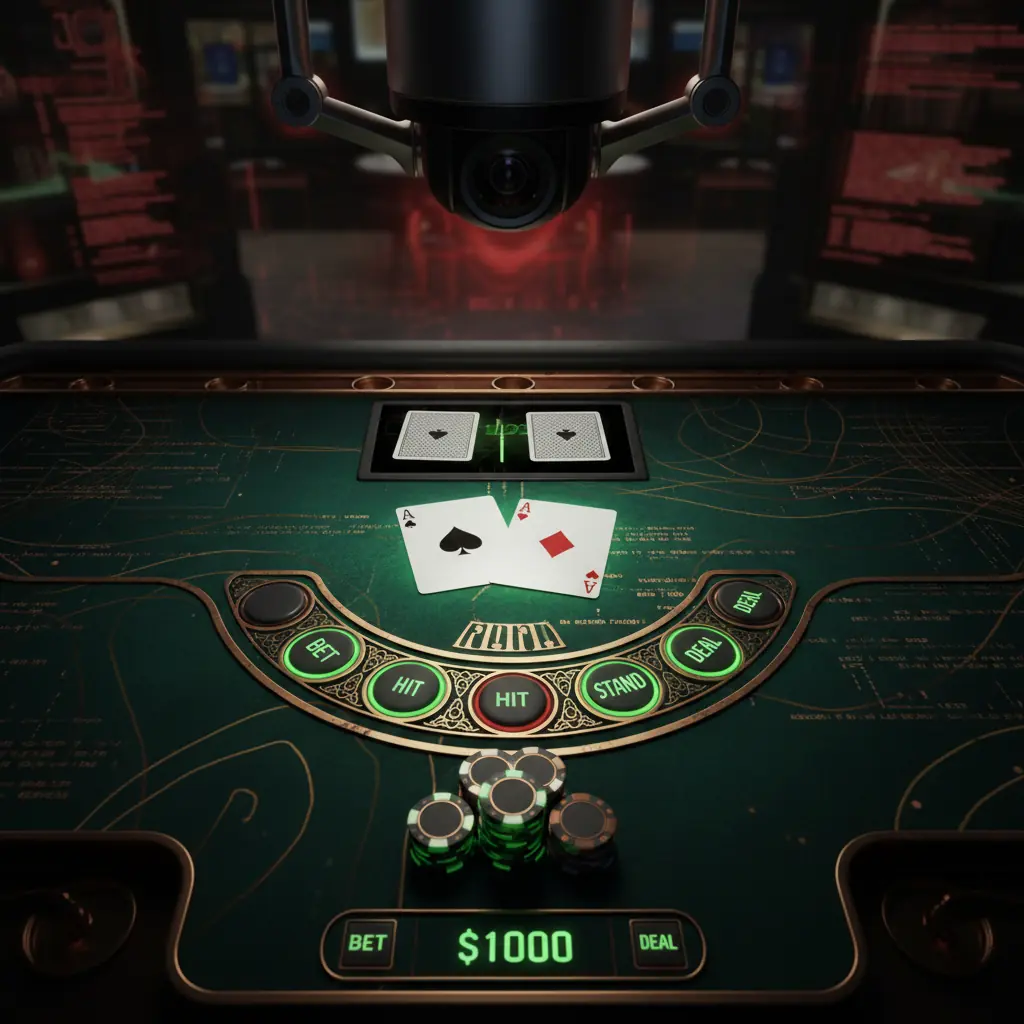
The allure of card counting, turning the tables on the house in blackjack and potentially reaping substantial rewards, is undeniably strong. For some, the idea of applying these strategies to online blackjack holds an irresistible appeal. However, the transition from the theoretical possibility to practical success is fraught with challenges unique to the online environment. Card counting in online casinos is significantly more difficult than in a traditional brick-and-mortar setting.
While the vision of effortlessly tracking cards from the comfort of your home might seem enticing, the reality involves overcoming obstacles like constant shuffling of virtual decks and the ever-watchful eyes of sophisticated detection systems employed by online casinos. These systems actively seek to identify and deter advantage play.
This section aims to provide an accurate and realistic perspective on card counting in the context of online blackjack. It offers some clarity to anyone curious about the feasibility and limitations, arming the reader with practical information to better understand the nuances of this strategy in the digital realm.
Understanding Card Counting Basics (For Online Play)
Card counting, at its heart, is a strategic technique used in blackjack to estimate whether the next hand is likely to favor the player or the dealer. While often portrayed in movies as a complex and elaborate scheme, the fundamental principle is surprisingly straightforward. It’s all about tracking the ratio of high cards (10s, face cards, and Aces) to low cards (2-6) that have already been dealt.
One of the most popular and easiest-to-learn systems is the Hi-Lo system. In this system, each card is assigned a value: low cards (2-6) are assigned a value of +1, middle cards (7-9) are assigned a value of 0, and high cards (10, Jack, Queen, King, Ace) are assigned a value of -1. As cards are dealt, you maintain a “running count” by adding or subtracting the appropriate value. For example, if the first five cards dealt are 2, King, 5, 8, and Queen, the running count would be +1 – 1 + 1 + 0 – 1 = 0.
The running count alone isn’t enough. To get a more accurate assessment, especially in multi-deck games common online, you need to calculate the “true count.” This involves dividing the running count by the estimated number of decks remaining in the shoe. So, if your running count is +4 and you estimate there are 2 decks left, the true count is +2. A positive true count suggests that there are more high cards remaining, giving the player an advantage. In theory, with a high true count, the user could raise their stakes.
Why Online Card Counting Is Different (And Harder)
The allure of beating the house at blackjack through card counting is a strong one. However, transitioning this strategy from the brick-and-mortar casino floor to the digital realm presents some tough challenges. While counting cards might seem like a straightforward application of mathematical probability, online blackjack introduces a series of obstacles that significantly diminish, if not completely negate, its effectiveness.
RNG and Constant Shuffling: The Impossibility of Tracking
At the heart of the issue is the Random Number Generator (RNG). Unlike a physical deck of cards that diminishes with each deal, online blackjack typically uses an RNG to shuffle the deck after every single hand. This means the “deck” is always starting fresh. Imagine trying to memorize a sequence when it’s instantly erased and replaced with a completely new one. This constant shuffling nullifies the basic premise of card counting, which relies on tracking the ratio of high to low cards remaining in the deck to predict the likelihood of favorable outcomes.
For example, in a live casino, if you’ve seen a disproportionate number of low cards dealt, you might increase your bet, anticipating more high cards to be dealt soon. Online, the game simply doesn’t work because each hand operates independently.
Game Speed and Time Constraints: A Blur of Digits
The rapid pace of online games presents another major hurdle. Online casinos can deal hands much faster than any human dealer. This lightning-fast gameplay leaves little room for the complex calculations and mental agility required for accurate card counting. Maintaining a precise count while navigating the interface and making betting decisions under strict time constraints becomes a significant challenge, even for experienced counters.
Casino Monitoring and Detection: The Digital Eye
Online casinos aren’t oblivious to card counting attempts. They employ sophisticated software to monitor player behavior, looking for unusual betting patterns or playing styles that might indicate card counting. If detected, casinos can take measures to restrict or ban players, effectively shutting down any potential advantage.
Varying Rules and Paytables: A Shifting Landscape
Unlike the standardized rules often found in land-based casinos, online blackjack games come with a diverse range of rules and paytables. These variations impact the house edge and the effectiveness of card counting strategies. What works in one online game might not be as effective, or even completely useless, in another. This disparity forces counters to adapt their strategies constantly, making consistent profits even more difficult to achieve. You might find a seemingly favorable paytable, but the constant shuffling and monitoring make it a mirage.

Popular Online Card Counting Systems (And How They Adapt)
The allure of beating the house has driven countless blackjack players to explore card counting systems. While these strategies are well-established in brick-and-mortar casinos, their effectiveness in the online realm is significantly diminished, if not altogether nullified. The digital environment introduces variables that pose considerable challenges to traditional card counting methods, yet people still attempt to find some workarounds.
Systems like Hi-Lo and KO, which rely on assigning values to cards and tracking the running count, face major hurdles online. The primary obstacle is the continuous shuffling of the virtual deck. Most online casinos use Random Number Generators (RNGs) to ensure fairness, effectively reshuffling the deck after each hand. This constant reset renders the running count useless, as the player’s information is wiped clean every round. In essence, the core principle of card counting – using accumulated knowledge of dealt cards to predict future outcomes – is undermined.
While some might argue for adapting the systems by attempting to track multiple hands simultaneously or looking for patterns in the RNG, these approaches are generally futile. The speed of online play, combined with the unpredictable nature of RNGs, makes such adaptations unreliable. Any perceived success is more likely attributed to luck or confirmation bias than actual strategic advantage. Therefore, while the established card counting systems remain theoretically sound, their practical application in online blackjack is highly questionable and generally ineffective.
Casino Countermeasures: How Online Casinos Detect Card Counters
Online casinos employ sophisticated surveillance techniques to detect and prevent card counting, making it an extremely challenging endeavor. Casino surveillance software monitors player behavior in real-time, scrutinizing betting patterns and playing styles. Any deviations from basic strategy immediately trigger alerts.
Detection methods extend beyond gameplay. Online casinos analyze various data points, including IP addresses and device information, to identify potential card counters. Risk management teams use these insights to implement countermeasures, such as increasing shuffle frequency to disrupt card counting strategies. Other tactics include imposing bet size limitations and, in extreme cases, closing player accounts.
The intense scrutiny and rapid response capabilities of online casinos make successful card counting a difficult task. Would-be advantage players face a constant uphill battle against sophisticated detection systems designed to protect the casino’s profits.
The Legal and Ethical Landscape of Online Card Counting
Card counting carries certain legal and ethical considerations, especially within the realm of online casinos. While the act of card counting itself isn’t strictly illegal, it operates in a gray area defined by casino rules and the right of a business to refuse service.
Online casinos, like their brick-and-mortar counterparts, are private establishments. Their terms and conditions, which players implicitly agree to upon creating an account, typically prohibit strategies perceived as giving the player an unfair advantage. Card counting often falls under this umbrella. If a casino suspects a player of card counting, they reserve the right to restrict or even close the player’s account. This can range from limiting betting amounts to outright banning the individual from the platform.
A more serious consequence is the potential confiscation of funds. Casino terms often stipulate that winnings obtained through prohibited strategies can be forfeited. The legality of this is debatable and can depend on jurisdiction, but it highlights the risks associated with card counting online.
The ethical dimension is where opinions truly diverge. Some argue that card counting is unethical, as it goes against the spirit of fair play and exploits perceived weaknesses in the casino’s system. Others view it as a legitimate application of skill and strategy, akin to a chess player calculating moves. Ultimately, adhering to the casino’s rules is paramount. Whether one agrees with those rules is a personal matter, but understanding and respecting them is crucial to avoid potential penalties.
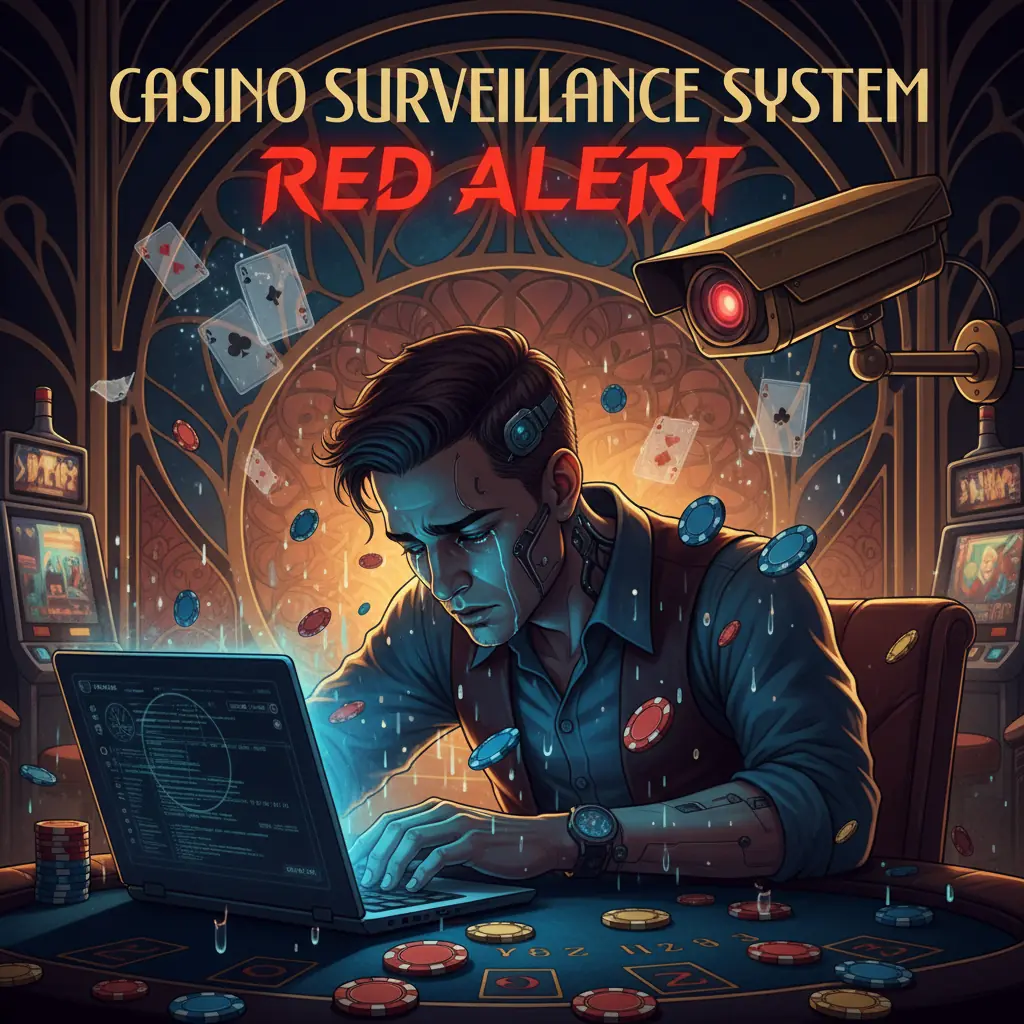
Minimizing Risk And Maximizing Potential (If Possible)
Attempting to count cards online comes with high risk, and success is unlikely. However, for those still inclined, certain risk mitigation strategiesmight* help to camouflage such activities, though they offer no guarantee of avoiding detection. Casinos employ sophisticated systems to identify and prevent strategies like card counting.
One approach involves varying betting patterns, avoiding consistent increases or decreases that could signal card counting. Playing at multiple online casinos also makes it harder for any single casino to track your play, but it increases the chance of being detected by the casino net. Using a VPN might mask your IP address, but casinos can still track betting behavior and other data, so it’s not a foolproof solution. Moreover, consistent use of a VPN itself can raise suspicion.
Online safety is crucial. Ensure the casino is reputable and uses secure connections. Protect your financial information and be wary of phishing attempts. Successful bankroll management is also important. Set limits and stick to them. Chasing losses can quickly deplete funds and increase the likelihood of detection as behavior becomes irrational.
Responsible gambling should always be the priority. Online card counting carries inherent risks, and attempting it should be done with extreme caution. Success is far from assured, and the potential consequences of getting caught extend beyond simply being asked to stop playing. The point of minimizing detection is not to provide a toolkit for assured profit, but to try and mitigate the inevitable risks that come with card counting in online casinos.
Future of Online Card Counting
The future of online card counting is a complex interplay of technological advancements and adaptive strategies. As online gambling evolves, so too do the methods employed by both players and casinos. Expect to see AI and machine learning play increasingly significant roles in this dynamic.
On one hand, AI could potentially enhance card counting techniques. Imagine sophisticated algorithms that analyze vast amounts of data in real-time, identifying subtle patterns and predicting card distributions with greater accuracy than humanly possible. Such advancements could make card counting more viable, even in online environments with countermeasures in place.
However, casinos are unlikely to stand still and watch. They will also leverage AI and machine learning to detect and counteract card counting attempts. Advanced surveillance systems could analyze player behavior, betting patterns, and decision-making processes to identify individuals employing card counting strategies. These systems could trigger alerts, adjust game parameters, or even ban suspected card counters from the platform.
The future may also bring about shifts in casino policies and regulations. To mitigate the risks associated with card counting, casinos might introduce new shuffling algorithms, limit bet sizes, or implement stricter verification procedures. Regulatory bodies could also play a role in shaping the landscape, establishing guidelines for fair play and responsible gambling.
Ultimately, the future of online card counting remains uncertain. As technology advances, the battle between players and casinos will likely escalate, leading to a constant evolution of strategies and countermeasures. Whether card counting becomes a relic of the past or adapts to thrive in the digital age remains to be seen.
Conclusion
In summary, while the allure of beating the house through online card counting is strong, the reality is far more complex. Sophisticated software, vigilant casinos, and the inherent limitations of the online environment stack the odds against you. Success is not guaranteed, and the risks are substantial.
The key takeaways should be clear. Online card counting is exceptionally difficult. Proceed with extreme caution so you don’t get caught. Ensure a solid understanding of basic blackjack strategy as the foundation for any attempts. Approach online blackjack with realistic expectations. It should be regarded as entertainment, not a get-rich-quick scheme.
For those still intrigued, remember that knowledge is power. Further refine your blackjack skills, explore different strategies, and always gamble responsibly. The world of online blackjack offers excitement and challenge, but only those who play smart and stay informed can truly hope to navigate it successfully.